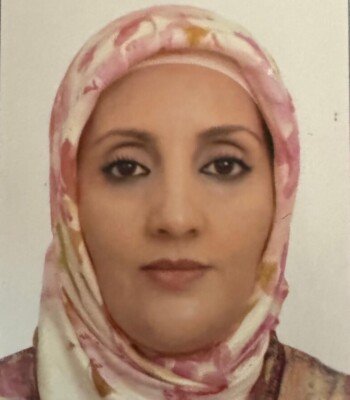
فاطمة مبارك سباع
| الاسم | فاطمة مبارك سباع |
| الجنسية | |
| التخصص | الشريعة واللغة العربية للناطقين بغيرها |
| المؤهل العلمي | باحثة دكتوراه |
| المرتبة الأكاديمية | محاضرة |
| جهة العمل | كلية الإلهيات، جامعة الفرات |
| المدينة | أكادير |
| الدولة | المغرب |
| سيرة ذاتية مختصرة (حوالي 200 كلمة) | باحثة وأستاذة جامعية متخصصة في اللغة العربية وتعليمها للناطقين بغيرها، وعلوم التربية والابتكار البيداغوجي والديداكتيك ومناهج وطرائق التدريس، إلى جانب تخصصها في العلوم الشرعية والقانونية وقضايا الأمن الأسري. محاضرة بكلية الإلهيات بجامعة الفرات بمدينة إيلازيغ في تركيا ، حيث درست اللغة العربية لغير الناطقين بها، واكتسبت خبرة أكاديمية وميدانية في تدريس العربية في بيئة جامعية متعددة الثقافات، وتوظيف المناهج والوسائل البيداغوجية الحديثة في تعليمها. لها إنتاج علمي في التربية والديداكتيك وتعليم العربية، من نماذجه: “مشكلات في واقع تعليم اللغة العربية للناطقين بغيرها”، و”تحليل المحتوى الثقافي لسلسلة مفتاح العربية لتعليم اللغة العربية لغير الناطقين بها”، و”مقاربة توظيف اللغات الوسيطة في تدريس اللغة العربية للناطقين بغيرها”، إلى جانب بحوثها في البيداغوجيا وعلوم التربية وتعليم اللغة العربية، ومن أبرزها: “أثر البيداغوجيا النقدية على تطور التفكير النقدي في التعليم الجامعي وفق رؤية Paulo Freire”، و”قواعد العصف الذهني عند Alex Osborn وتطبيقها داخل الفصل الدراسي متعدد الثقافات”، و”الدمج الاجتماعي والتربوي وتحسين فرص التعليم لذوي الاحتياجات الخاصة باستخدام الذكاء الاصطناعي”، فضلاً عن “توظيف أنظمة الذكاء الاصطناعي في تحليل النصوص القرآنية: معالجة سورة الرحمن بتقنية AntConc نموذجاً”. تنتمي إلى عدد من الهيئات العلمية والتحكيمية، منها هيئة تحرير مجلة تفكر، وهيئة الإشراف والتحكيم العلمي بمجلة الراسخون، ومحكِّمة بمجلة Aydın بجامعة إسطنبول أيدن، وعضو الهيئة الاستشارية لمركز نبراس. وهي باحثة في الأمن الأسري، وعضو مختبر الاجتهاد المعاصر بكلية الشريعة جامعة ابن زهر بالمملكة المغربية، وتتميز بجمعها بين العلوم اللغوية والبيداغوجية والشرعية والقانونية، مع حفظها للقرآن الكريم. Fatima Sbaa Fatima Sbaa is a doctoral researcher and university lecturer specializing in Arabic language education for non-native speakers, with expertise in educational sciences, pedagogical innovation, didactics, teaching methodologies, and instructional approaches. Her academic interests also encompass Islamic and legal studies, with a particular focus on contemporary issues of family security. She served as a lecturer at the Faculty of Theology, Fırat University, Elazığ, Türkiye, where she taught Arabic to non-native speakers and gained extensive academic and practical experience in Arabic language education within a multicultural university environment, as well as in the application of modern pedagogical approaches and educational tools. She has produced scholarly research in education, didactics, and Arabic language teaching, including “Problems in the Current State of Teaching Arabic to Non-Native Speakers,” “Cultural Content Analysis of the Miftah Al-Arabia Series for Teaching Arabic to Non-Native Speakers,” and “An Approach to the Use of Mediating Languages in Teaching Arabic to Non-Native Speakers.” Her research also addresses pedagogy, educational sciences, and Arabic language education, notably “The Impact of Critical Pedagogy on the Development of Critical Thinking in Higher Education According to Paulo Freire’s Perspective,” “Alex Osborn’s Brainstorming Rules and Their Application in Multicultural Classrooms,” “Social and Educational Inclusion and Enhancing Educational Opportunities for People with Special Needs through Artificial Intelligence,” and “Employing Artificial Intelligence Systems in Qur’anic Text Analysis: Processing Surat Al-Rahman Using AntConc as a Case Study.” She is affiliated with several academic and scholarly bodies, including the Editorial Board of Tafakkur Journal, the Scientific Supervision and Peer-Review Board of Al-Rasikhun Journal, and serves as a peer reviewer for Aydın Journal at Istanbul Aydın University and as a member of the Advisory Board of Nibras Center. She is a doctoral researcher in family security and a member of the Contemporary Ijtihad Laboratory at the Faculty of Sharia, Ibn Zohr University, Morocco. Her distinctive academic profile is characterized by an interdisciplinary integration of linguistic, pedagogical, Islamic, and legal studies, complemented by her memorization of the Holy Qur’an. |
 Arabic
  English